

Why climate change is a national security issue
Climate change and its impacts create new security challenges and make existing ones worse.

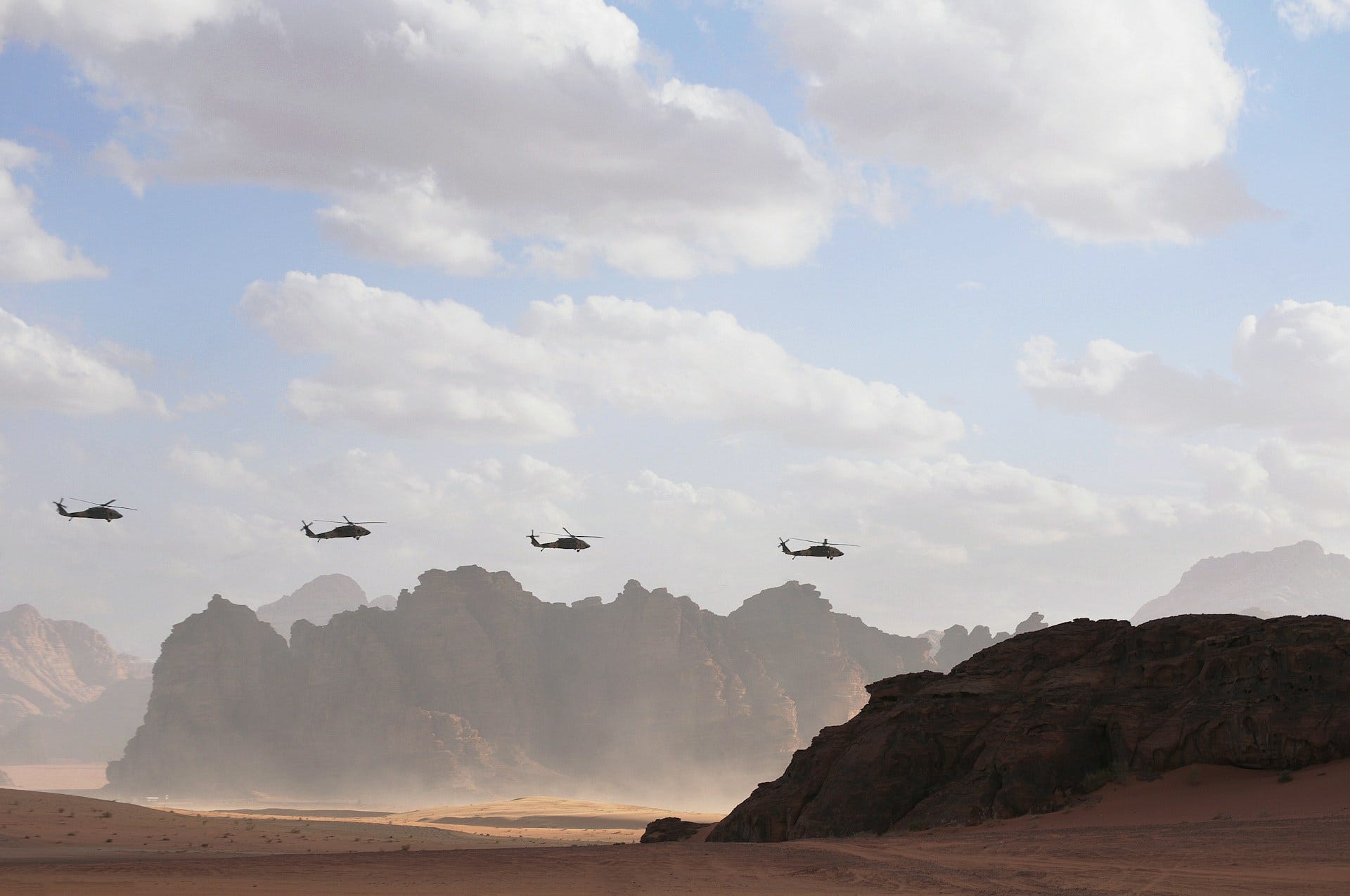
Climate change and its impacts pose a significant threat to our national, regional and global security and to our ability to defend ourselves and others.
Changing weather patterns increase demand for scarce resources. Extreme weather events and climate-related disasters place additional pressure on the capacity of armed forces. And increasing temperatures and rising sea levels challenge the operational readiness of military personnel, bases and materiel.
This growing threat is, however, rarely mentioned by policymakers and climate activists. But it is very much on the radar of those charged with our defence.
And it should be on your radar, too.
Climate change and national security
The North Atlantic Treaty Organisation’s Climate Change and Security Centre of Excellence recognises that climate change is a significant threat to NATO’s security, with the potential to impact all aspects of its future operating environment.
The UK Government, in its national security assessment of biodiversity loss and ecosystem collapse, acknowledges that crop failures, intensified natural disasters and infectious disease outbreaks brought about by climate change will threaten the nation’s security. And that this threat will increase as global ecosystems continue to degrade.
And the UK Parliamentary Office of Science and Technology highlights the role of climate change in exacerbating existing security tensions, for example through its adverse impact on key sectors and regions and through the disruption of global supply chains.
Climate change is, then, both a ‘shaping threat’ and a ‘threat multiplier’. It creates new challenges and, at the same time, exacerbates existing ones. It makes stable parts of the world unstable. And it makes unstable parts of the world even more unstable.
It presents a direct challenge to the global order and to our ability to maintain order.
A threat to the global order
The impacts of climate change are, according to the UK Ministry of Defence, likely to bring about conditions of increased instability on the global stage.
They will, for example, create greater competition for scare resources. This will include essentials like food and water, as well as land that is suitable for agriculture, rare earth metals and other natural resources, and the capacity to generate energy.
Such factors could lead to mass migrations – within individual states, across regions and around the world – as individuals and their families seek to escape climate-driven threats and to create a safer and more prosperous life for themselves.
Climate change will also cause new and more severe health crises, such as those resulting from exposure to extreme heat, the spread of diseases outside their normal ‘territories’, respiratory illnesses caused or exacerbated by poor air quality, malnutrition brought about by food shortages and injuries sustained in extreme weather events.
Furthermore, climate change – and our response to it – will challenge existing energy geopolitics, especially if the move to renewable energy results in changing patterns of global influence (e.g. away from those states that are major suppliers of oil and gas) and increasing demand for rare earth metals.
Such changes will also have an economic impact, potentially challenging the economic models of states around the world that have become reliant on income from the extraction and export of fossil fuels. They may, furthermore, alter the competitive dynamics between states as, for example, those with abundant supplies of rare earth metals seek to leverage their position for increased geopolitical influence.
These and other climate-driven factors are likely to result in increased poverty and greater inequality, which create fertile conditions for civil unrest. They will present opportunities for entrepreneurial non-state actors, not all of whom will be of benign intent. And they may well cause increased tensions within and between states and present challenges to the integrity of the global geopolitical order.
All of which means that we will almost certainly see an increase in climate-driven conflict around the world.
And a threat to military operations
Climate change and its impacts will also challenge the ability of military forces around the world to respond to emerging threats.
NATO’s Climate Change and Security Centre of Excellence highlights, for example, that extreme weather events driven by climate change – such as elevated temperatures, droughts, wildfires, and flooding – can weaken NATO’s capacity in terms of personnel, equipment, weaponry, tactics and infrastructure.
In the longer term, climate change will also challenge the operational readiness and resilience of military bases and other infrastructure, with certain strategic sites being vulnerable to rising sea levels, melting permafrost and other climate impacts.
Furthermore, much in the way of modern military equipment and capabilities for combat, communications and intelligence gathering are sensitive to weather conditions and will require adaptation to the impacts of climate change, such as intense winds, more frequent storms, increased water salinity, greater humidity and more comprehensive cloud cover.
Military personnel are equally vulnerable to the impacts of climate change. Rising global temperatures, in particular, have an adverse impact on the physical and mental health of military personnel and increase the need for medical assistance in combat, humanitarian and other military operations.
It’s happening right now
According to NATO, its member states are already experiencing the impact of climate change on their military capabilities and readiness. And responding to the challenges that these impacts create is taking time, costing money and necessitating increased technical innovation.
Furthermore, military forces around the world are increasingly being called upon to assist in national, regional and global responses to climate and extreme weather events. This diverts capacity, attention and resources from these forces’ primary purpose. And, sadly, leaves both them and their ‘home’ states at increased vulnerability to attack.
Climate change and climate-driven extreme weather events, notably droughts and extreme temperatures, are having an increasingly adverse impact on global agricultural harvests and supply chains. This is causing short-term shortages and price rises. It is also driving instability and localised conflict.
It may, however, also lead to regional and geopolitical tensions if current trends continue, especially if ‘producer’ states cease – quite reasonably, I might suggest – exports of critical agricultural and other goods so as to prioritise domestic food security and resilience.
Climate change is, moreover, altering the geopolitics of certain strategic environments around the world, as can be seen in the Arctic, where retreating sea ice is opening up navigational routes and creating access to valuable natural resources.
And it’ll happen more in the future
It is inevitable that the impacts of climate change will continue to disrupt the ecosystems, resources, infrastructure and services upon which states around the world rely for their security and prosperity. And that the frequency and severity of the disruption will increase.
This disruption, says NATO, will lead to water and food scarcity, health crises and severe loss of livelihoods. And it predicts that these will, in turn, become catalysts for inequality, political instability, violence and mass displacement.
The UK Ministry of Defence expects that its military forces will face greater demands on their capacity and resources as first responders to climate-driven disasters, both domestically and internationally.
It also anticipates also that its military bases and infrastructure around the world will increasingly be affected adversely by rising sea levels and that climate events will pose more frequent and more significant challenges to its operations.
And the UK is not alone. It is evident that countries around the world are anticipating the same challenges. And that they are working rapidly to adapt to the impacts of climate change on national, regional and global security.
A new approach to security is needed
Adapting to the impacts of climate change will require changes in the way states around the world approach national security. However, it appears that the biggest change that is required may well be the way they think about security.
In the past, national security has been very much about protecting national borders. However, climate change and its impacts do not respect national boundaries. They are not people or states with objectives, strategies and ideologies. They cannot be threatened, bargained with or engaged with force.
Consequently, what we need, say researchers and security experts, is a new global approach to security that takes account of the need to respond effectively to climate change.
The key to security in a climate-changed world is, they say, adaptation and resilience. But not just for our armies, navies and air forces. Helping people, communities and states around the world to adapt to climate change and to increase their resilience to its impacts is essential if we are to mitigate climate risks to global security.
This may entail global governance of adaptation efforts. And it is almost certainly going to require extensive funding of adaptation around the world, especially in those countries that are most vulnerable to the impacts of climate change.
Adaptation and resilience
States around the world will, of course, also need to invest in climate adaptation and resilience for their own security apparatuses, if these are to remain viable in the face of climate change and its impacts.
It is evident already that early investment in climate change adaptation is essential to ensuring long-term resilience, as well as to minimising long-term financial impacts and to enhancing – or even just maintaining – military effectiveness.
And such resilience is vital if national militaries and international military alliances are to be able to absorb climate shocks and to recover rapidly, without leaving themselves vulnerable in the meantime.
Again, the biggest challenge here is likely to be the mental one. States need to acknowledge the impacts of climate change and to integrate consideration of these impacts into their decision making. And they need to establish the structures and processes that will allow them to do this.
But adaptation and resilience represent a physical challenge, too.
As a minimum, military forces will need to ensure that they – and their equipment – can operate in a world that is 2 to 4 degrees Celsius warmer and that is plagued by a growing number and range of climate-driven extreme weather events.
This will, in turn, require the availability of robust data, information and insight on climate matters that can be fed into military planning and decision making.
The UK Ministry of Defence calls this a ‘climate lens’, which I think is an excellent way of thinking about it.
Military planning through a climate lens
Looking through this climate lens, military commanders recognise increasingly, for example, that their forces must be able to deploy in a self-sufficient manner. This will enhance their resilience to local conditions and ensure that they don’t place undue pressure on existing local resources, which may already be scarce.
It will also help to reduce the need for resupply missions and improve operational freedom by reducing reliance on vulnerable communications networks and supply chains.
Military forces will need to give thought, too, to how they can maintain effective training in a climate-changed world. Extreme heat, for example, already takes its toll on service personnel training in outdoor environments. But such training remains necessary nevertheless. And so ways must be found to ensure that it can be undertaken as safely as possible.
Those charged with national defence must also be prepared to assist with domestic and international disaster response. The need for such response is set to increase, as climate-driven disasters and extreme weather events increase in both frequency and severity.
Consequently, military forces will face new challenges, greater pressure on their capacity and a growing need to work together with a broader range of partners, both at home and around the world.
It is evident, then, that climate change is very much a national security issue. Indeed, it presents profound challenges to national security, to global security and to the ability of states’ military forces to function effectively.
And these challenges are set to increase in both complexity and severity as the impacts of climate change progress.